Jerboa (Dipus), a genus of rodent quadrupeds, belonging to a distinct family, Dipodidae, remarkable for the great length of the hind-legs and kangaroo-like power of jumping. The fore-legs are very small, hence the ancient Greek name dipous ('two-footed'). The tail is long, cylindrical, covered with short hair, and tufted at the end.
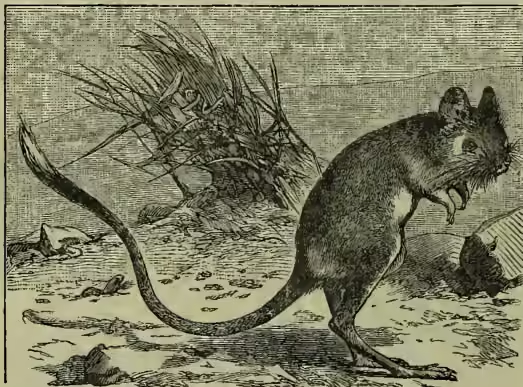
The jerboas are inhabitants of sandy deserts and wide grassy plains in Asia and the east of Europe and Africa. An allied form, Meriones, occurs in North America. They are burrowing animals, nocturnal, very destructive to grain and other crops, laying up hoards for their winter use. They take prodigious leaps when alarmed; the fore-feet are then not used at all, but by means of the hind-feet and the tail they leap, although they are small animals, several yards. Their flesh is said to resemble that of the rabbit.—Closely allied to the jerboas are the Gerbils (Gerbillus), small quadrupeds, also distinguished by great length of hind-legs and power of leaping, inhabitants of the warm and sandy portions of the Old World.