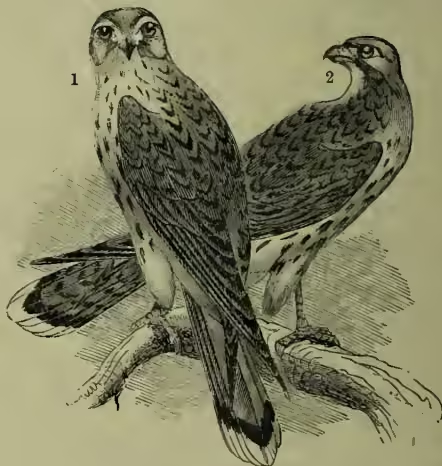
1, the male; 2, the female.
Kestrel, or WINDHOVER (Falco tinnunculus), a small species of falcon found in the north of Europe in the warmer months, resident in the south all the year round, and particularly abundant in Spain. In Britain it is one of the commonest birds of prey, though its numbers were considerably reduced by persecution before its harmlessness and its utility as a check on the too rapid multiplication of mice were fully recognised. The name windhover refers to the bird's graceful habit of balancing itself in gale or calm, as some other birds do, by a slight, continuous flapping of the wings. Jefferies thus describes the mechanism of hovering: 'While hovering there are several forces balanced: first, the original impetus onwards; secondly, that of the depressed tail dragging and stopping that onward course; thirdly, that of the wings beating downwards; and fourthly, that of the wing a little reversed beating forwards, like backing water with a scull.' The food of the kestrel consists chiefly of mice, but it also eats insects, which it catches while on the wing, and occasionally small birds. It rarely builds a nest of its own, but appropriates one forsaken by another bird, or lays its eggs in any convenient cavity. The eggs are creamy white, thickly mottled with reddish brown, or sometimes entirely reddish brown. The adult male measures about 13 inches; the prevailing colour is a pale brown marked with black; the head, neck, and tail are bluish gray. The female is larger than the male, and is reddish brown with bars of black. The Lesser Kestrel (F. cenchris), which has occasionally been found in Britain, closely resembles the common species, but has the claws white instead of yellow. The common sparrowhawk of the United States (F. sparverius) is also a near relative, and allied species are found in nearly all parts of the world. The whole group is sometimes separated off from Falco as a sub-genus Tinnunculus.