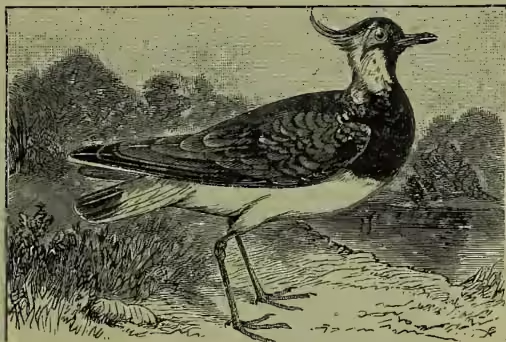
Lapwing (Vanellus vulgaris), a common British bird in the plover family Charadriidæ. The familiar cry is echoed in the names Peewit, Scotch Pees-veep, Old English Wype, and French Dixhuit; while the regular, slow flapping of the long, rounded wings is referred to in the title lapwing. It usually resides in Britain all the year, and is widely distributed across Europe and Asia. Its haunts are marshy pastures and moorlands; its food worms, slugs, and insects; its nest little more than a depression in the ground; its eggs, four in number, olive-green to stone-buff in ground colour, with blackish-brown blotches, are laid in April. When disturbed the female runs from the nest, while her mate, with devious flight and anxious cries, strives to divert attention away from the nest. After the young are hatched, the parents both exhibit loving solicitude. The adults are about a foot long, with crested head and very beautiful plumage, which almost baffles brief description. The birds themselves are eaten, and the eggs are highly esteemed. Most of the plover eggs sold in Britain are lapwings' eggs gathered in the Netherlands and North Germany. See PLOVER; and Howard Saunders, Manual of British Birds.