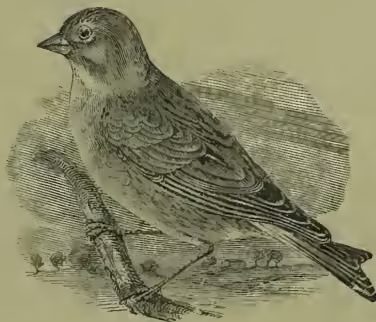
Linnet (Acanthis), a genus of Passerine birds in the finch family Fringillidae, familiarly represented by the Grey, Red, or Rose Linnet (Acanthis cannabina). This bird is common in Britain, and widely distributed in Europe and in north-west Africa. It is rather under 6 inches in length, and exhibits, as its common names suggest, a marked seasonal change of plumage. It feeds on soft seeds, and breeds in spring. The nest, made of soft stems and moss, lined with wool and down, is especially common in furze and other low bushes. The eggs (4 to 6) have a bluish-white ground, speckled with reddish brown or purplish red; two broods may be reared in the season. The linnet or 'lintie' sings well, is amenable to education, and is but too often caged. In the mountain-regions of Scotland it is represented by the Twite or Mountain-linnet (A. flavirostris), while other British species are the Mealy Redpole (A. linaria) and the Lesser Redpole (A. rufescens), the smallest of British finches. The Green Linnet is the Greenfinch (Ligurinus chloris).