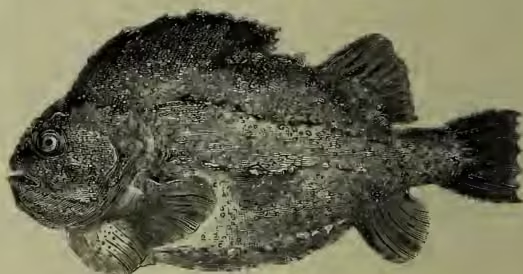
Lumpsucker, or LUMPFISH (Cyclopterus), a genus of fishes of the family Discoboli, having the head and body deep, thick, and short, the back with an elevated ridge, which contains within it the anterior dorsal fin, the skin without scales, but with rows of rough bony tubercles, the fins rather small, and the ventrals united by a membrane so as to form a sucking disc.—One species (C. lumpus) is common on the coasts of Britain, particularly in the northern parts, and is still more plentiful in the seas of more northern regions. It is frequently, especially in spring, taken in large numbers in salmon stake-nets. It has a grotesque and clumsy form, but its colours are very fine, especially those of the male, combining various shades of blue, purple, and rich orange. It attains a pretty large size, sometimes weighing seven pounds. The lumpsucker preys on smaller fishes. Its sucker is so powerful that a pail containing some gallons of water has been lifted when a lumpsucker contained in it was taken by the tail. It deposits large adhesive ova which stick together in large masses attached to stones or piles near low-water mark: they are guarded during development by the male. The young are without the tubercles and resemble tadpoles; they have the ventral sucker even when first hatched. It breeds in spring. Its flesh is insipid at some seasons, but very fine at others, and is much used for food in northern regions. It is known in Scotland as the Cock-paddle, probably from the resemblance of its dorsal ridge to a cock's comb; the female, which is larger than the male, is usually distinguished as the hen-paddle.