Lynx, a genus of Felidæ, having a less elongated form than many others of that family, the body elevated at the haunches, long fur, a short tail, and the ears tipped with tufts or pencils of hairs.
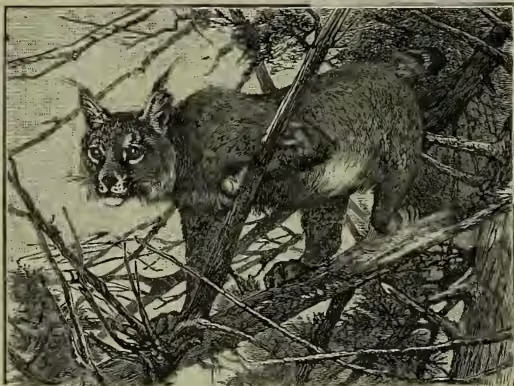
They are less courageous than other Felidæ of similar size, and prey on small quadrupeds and birds. It has been said that they kill and devour the skunk. In pursuit of birds they climb trees. They are generally of a sullen and suspicious temper, and not easily tamed. The species are not numerous, but widely distributed; the distinctions of species and varieties are somewhat uncertain. The European Lynx (L. virgatus) is common in many parts of Europe and Asia, chiefly in mountainous and wooded districts. Its colour is variable, but generally of a dark reddish gray, spotted with reddish brown, the belly whitish. It is about three feet long, and proverbial for acuteness of sight. It is hunted in winter for its fur, which is always in demand in the market; but many of the lynx skins imported from the north of Asia probably belong to other species. Those of North America, and probably also many of those of the north of Europe and of Asia, are the skins of the Canada Lynx (L. canadensis or L. borealis), which is generally of a hoary gray-colour, a broad space along the back being blackish brown. It is rather larger than the European Lynx, and more clumsy in form. The Bay Lynx (L. rufus) is found in more southern parts of North America, both in mountainous and in swampy districts, and often makes great havoc among poultry; it is commonly called in America the wild cat. But as all these forms graduate into one another they should probably be referred to a single species. The Asiatic species are the Caracal and the Tibet Lynx.