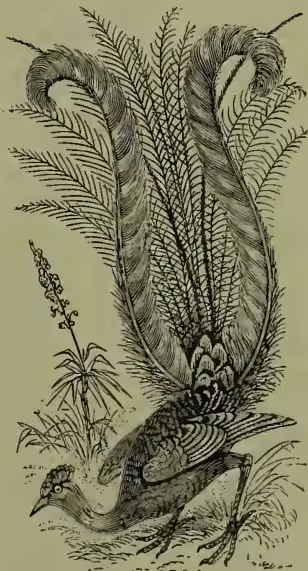
Lyre-bird, or LYRE-TAIL (Menura), a genus of birds, of which the best-known species (M. superba) is a native of New South Wales, where it is generally called the Lyre Pheasant. The proper place of this genus has been much disputed by ornithologists, though it undoubtedly belongs to the Passeres. A bird about the size of a pheasant, it frequents the brush, or sparsely-wooded country, in the unsettled parts of New South Wales, but retreats from the more inhabited districts, being extremely shy and difficult to approach. It is by far the largest of all song-birds, and possesses the power of imitating the song of other birds and the sounds of other animals, imitating even the bark of the dingo. The tail of the male is very remarkable and splendid, twelve feathers being very long, and having very fine and widely-separated barbs; whilst, besides these, there are two long middle feathers, each of which has a vane only on one side, and two exterior feathers, curved like the sides of an ancient lyre. The lyre-bird makes a domed nest. A second species (M. alberti), also Australian, has been named in honour of Prince Albert. The lyre-shaped feathers of its tail are comparatively short and destitute of bars.