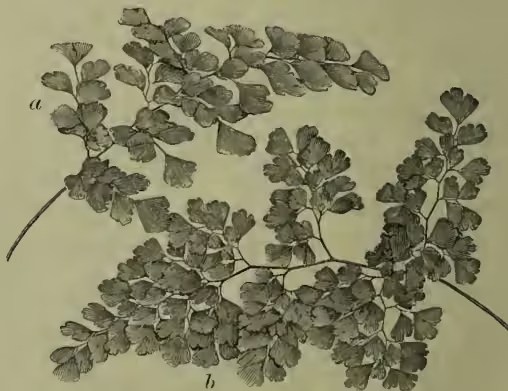
a, Adiantum Capillus-Veneris; b, Adiantum cuneatum.
Maidenhair (Adiantum Capillus-Veneris), a small, delicate, and graceful fern, with bipinnate fronds, alternate obovate and wedge-shaped membranaceous pinnules on capillary stalks, and marginal sori hidden beneath oblong indusia; growing on moist rocks and old walls, especially near the sea; rare in Britain, but very abundant in the south of Europe, where it covers the inside of wells and the basins of fountains (as at Vauchuse) with a tapestry of the most delicate green. Another species of the same genus, A. pedatum, a native of North America, with pedate leaves, has a sweet, fragrant root-stock, of which Capillaire (q.v.) is made. It is supposed that the name maidenhair originated in the use of a mucilage made from this fern by women for stiffening their hair. This name is sometimes applied also to some species of spleenwort (Asplenium), as A. adiantum nigrum and A. trichomanes. It is also applied to the Adiantum family generally, of which there are many species and varieties. The most common of all and best known popularly is A. cuneatum, a Brazilian species, which is much cultivated by florists.