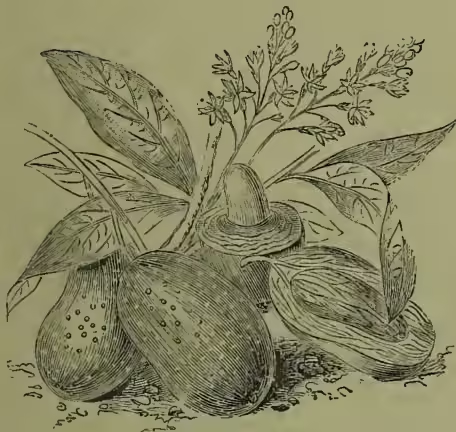
Mango (Mangifera indica, natural order Anacardiaceæ), one of the most esteemed fruits of India. The tree grows from 40 to 50 feet high, with spreading top and numerous branches, at the extremities of which are the densely-crowded long lanceolate leaves. When in flower it bears some resemblance to the Sweet Chestnut. The fruit, which is a fleshy drupe, when fully ripe is somewhat kidney-shaped or oval, varying in size from that of a small hen's egg to a large goose's egg, in colour yellow or reddish, speckled with black, and containing a large flattened stone, the kernel of which is nutritious. There are several varieties of mango. Some have the flesh of the fruit full of fibres, and are on that account considered inferior; those that cut like an apple, and have few or no fibres, are the most highly esteemed. The fruit is eaten without any preparation, except peeling the outer rind off. Jellies, preserves, and tarts are made of the unripe fruit, and it is also pickled. Mango was introduced into Jamaica in 1782, and is now very generally cultivated in tropical and subtropical countries. The tree is ordinarily raised from seeds, but, as the finer varieties cannot be depended upon to come true from seeds, they are increased by layering and inarching. M. sylvatica, besides being eaten when ripe and fresh by the natives of India, is dried and used medicinally. M. oppositifolia, the fruit of which is of the size of a pullet's egg, is much esteemed in Burma.