Marten (Mustela), a genus of digitigrade carnivorous quadrupeds of the family Mustelidae, differing from weasels in having an additional false molar on each side above and below, a small tubercle on the inner side of the lower carnivorous cheek-teeth, and the tongue not rough—characters which are regarded as indicating a somewhat less extreme carnivorous propensity. The body is elongated and supple, as in weasels, the legs short, and the toes separate, with sharp long claws; the palms and soles are generally, but not always, furry. The ears are larger than in weasels, and the tail is bushy. The martens exhibit great agility and gracefulness in their movements, and are very expert in climbing trees, among which they generally live. There are nine or ten species in this genus, which are distributed over Europe, Asia,
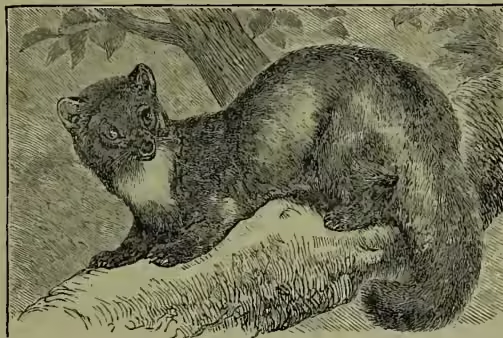
Malaya, and North America. The American 'Pekan' (M. pennanti) is the largest species, measuring as much as 46 inches from the snout to the tip of the tail. The most valuable species of marten is the European Sable (M. zibellina). Two species of marten, closely resembling one another, occur in Great Britain—the Common or Beech Marten (M. foina) and the Pine Marten (M. martes). They are often hunted with foxhounds; for this and other reasons they are getting much less plentiful, though still to be frequently met with in certain localities.