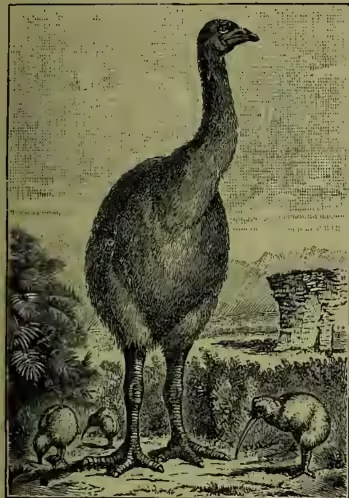
Moā (Dinornis, ‘monstrous bird’), the name given by the Maoris to a genus of extinct ostrich-like birds that inhabited New Zealand and, to a less extent, Australia. It is supposed that none has been seen alive since about the middle of the 18th century, but the Maoris have many traditions relating to them, and moa-hunting was a recognised sport. Their bones have been found in great numbers imbedded in the sands of the shore, and of lakes, swamps, and river-beds. A few remains of eggs have also been found, and one nearly complete one containing a young bird; the eggs were about 10 inches long and 7 broad. Feathers and a part of the neck with muscles and skin attached have been discovered. There were several species of various size, the smallest about 2 feet, the largest about 14 feet in height. Their chief peculiarity was the entire absence of wings, not even the smallest rudiments having been found; associated with this was the great size and weight of the legs, the bones of which and of the toes were in one species almost elephantine. There was an allied genus called Palapteryx which possessed the rudiments of wings and a fourth toe, which was absent in moa. They are most nearly represented at present by the genus Apteryx, whose relative size may be seen in the figure.