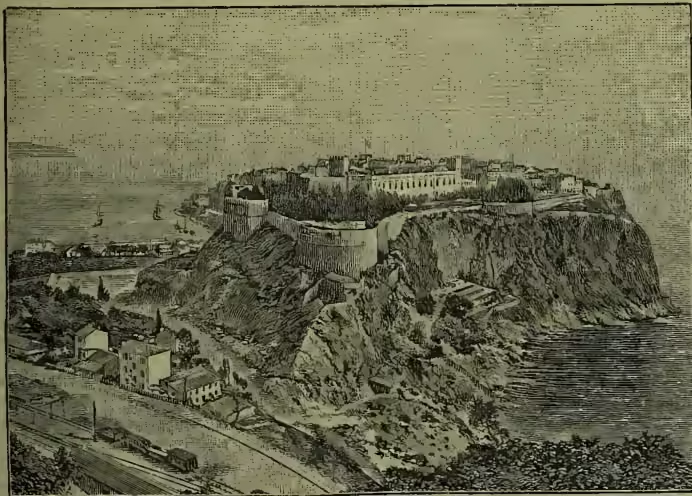
Monaghan, an inland county of Ulster, Ireland, situated between Tyrone and Meath; area, 319,741 acres (496 sq. m.), of which 140,000 are under tillage. Pop. (1841) 200,442; (1881) 102,748; (1891) 86,206 (of whom 73 per cent. were Catholic). The principal towns are Monaghan, Carrickmacross, Clones, and Castle-Blayney. It returns two members to parliament. Monaghan, granted by Henry II. to De Courcey, speedily fell back into the hands of the native chiefs of the sept MacMahon, by whom (with some alternations of re-conquest) it was held till the reign of Elizabeth, when it was erected into a shire. The county possesses two round towers, one, very complete, at Clones, the other at Inniskeen; and there are several raths and Danish forts. The name Monaghan is derived from 6218 in Condamine, and 3794 in Monte Carlo. The territory, which is encircled by the French department of Alpes Maritimes and the sea, consists mainly of the rocky promontory on which the capital is built, and a small strip of coast. For more than nine hundred years it has belonged the Irish Muinechan, 'Monkstown,' a monastery having stood here at a very early date.
MONAGHAN, the county town, is 76 miles NNW. of Dublin by rail. The town, which returned two members to the Irish parliament, is still the centre of some trade in agricultural produce, and can boast several public buildings of considerable pretensions, among which are the Catholic college and church, the infirmary, and national model school. Pop. (1861) 3910; (1891) 2938. See Evelyn P. Shirley's History of the County of Monaghan (1877-80).