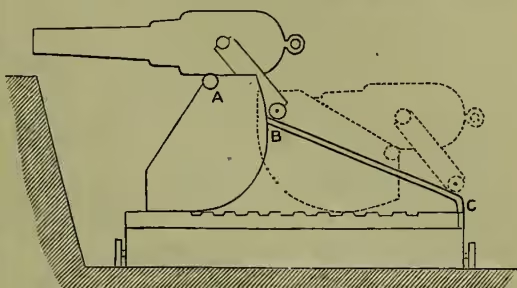
Moncrieff Pits (named after the inventor, Sir Alexander Moncrieff) are excavations in which heavy guns are placed in coast batteries or other places where it is specially necessary to protect them from hostile artillery fire. The Moncrieff system of mounting utilises the force of recoil to bring the gun down into the loading position at the bottom of the pit. It is returned into the firing position (shown in the figure) either, as in the early patterns, by means of a heavy counterweight in front of the breast of the gun-carriage, or, as in later designs, by hydro-pneumatic machinery. When the counterweight is used, the side brackets of the carriage on which the disappearing movement takes place are made on a specially designed curve, so that this movement may be regular and without any violent shock. The figure represents a diagrammatic section of this arrangement. A is the rotating side bracket revolving on teeth; BC are two inclined planes keeping the gun horizontal as it descends into the position shown by dotted lines. The same result is obtained in the hydro-pneumatic system of mounting by means of recoil presses, which also store up the force of the recoil and enable it to be used to elevate the gun into the firing position. The invention belongs to the years 1868-72.