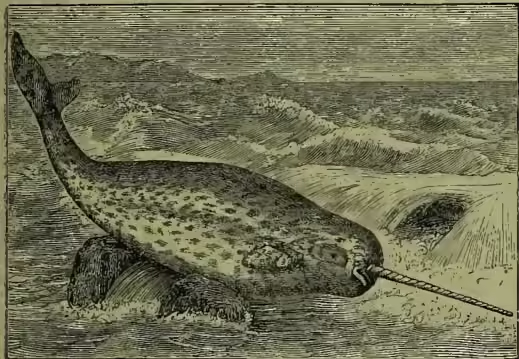
Narwhal (Monodon), a genus of Cetacea, belonging to the Odontocetes or toothed whales (see WHALE); it is characterised by the presence in the adult male of a long tusk, and by the early disappearance of the other teeth, and by other structural points of less importance. The tusks represent canine teeth, and there are sometimes a pair of them present, lying side by side in the upper jaw; there is such a specimen in the Cambridge Museum. When there is only one tusk, it is the left; rarely the female has a tusk, so rarely, however, that there are only three instances on record. There is only one species known, M. monoceros, which inhabits the northern seas, and has been on one or two occasions stranded on British shores; it was first recorded in Britain by Vulpius from the Isle of May in 1648; another was observed in 1800 in the Wash in Lincolnshire. It is common off the shores of Greenland, and is hunted for its oil as well as ivory; as the creature is gregarious, sometimes travelling in herds 'of many thousands,' it is captured in considerable abundance. In early times the tusk of the narwhal was valued in medicine, and to this day is so used by the Chinese. The ivory is very fine, and in the castle of Rosenborg at Copenhagen is a throne of the kings of Denmark made of this substance. The female narwhal is more spotted than the male, and the young darker. The fact that the female has not the tusk seems to negative the view that it is of use in spearing fish; it is no doubt used by the males for fighting—for examples are seldom unbroken. Fabricius thought that their use was to break and keep open holes in the ice during the winter, and observers have seen such breathing-holes crowded with heads of narwhal and other whales.