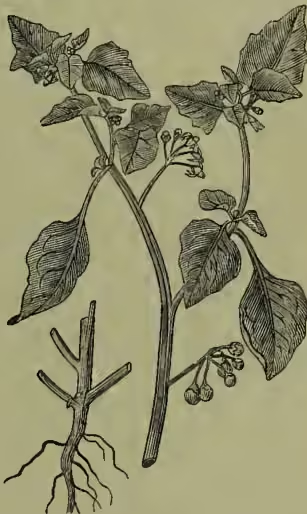
Nightshade, the English name of certain plants of the natural order Solanaceæ (q.v.), possessing the narcotic properties frequently developed in that order. Among them are some species of Solanum (q.v.), particularly the Common Nightshade, or Black Nightshade (S. nigrum), an annual or biennial, with erect angular stem, ovate, sinuate-dentate leaves, drooping lateral umbels of white flowers, and globose black berries; a frequent weed in waste places in England and in most parts of the world. Few plants are more widely diffused. It is only slightly narcotic. The leaves in a fresh state are said to be injurious to animals which eat them, but seem to lose almost all narcotic property by boiling, and are used as spinach, particularly in warm climates. The berries, although generally dreaded or suspected, may also, it is said, be eaten, at least in moderate quantity, without danger. They contain, however, the alkaloid Solanine, found also in the shoots of the potato. For the Woody Nightshade, see BITTERSWEET; for the Deadly Nightshade, see BELLADONNA; and for Enchanter's Nightshade, see CIRCÆA.