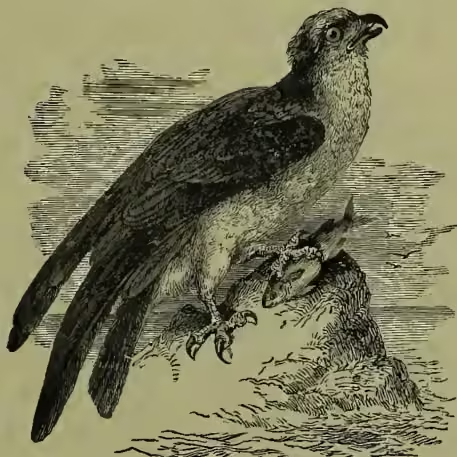
Osprey (Pandion haliaetus), or FISH-HAWK, a not infrequent autumnal visitor to British shores, estuaries, and lochs, where it feeds exclusively on fish. It has been known to breed in England, and several eyries still remain in Scotland. But its distribution is almost cosmopolitan, for it occurs on all the continents, especially where fish are common and men rare. The male bird is 22 inches in length, the female 24. 'The adult male has the head and nape white, streaked with brown; upper plumage umber, with a purplish tinge; under parts white, with a band of brown spots across the breast; cere, legs, and toes greenish blue. The female has more brown on the breast. A large nest of sticks and turf, with a small moss-lined cavity for the eggs, is built on a tree or rock. The eggs (two or three) are laid in April or May, and have a 'ground colour of white or buff, with chestnut or claret blotches, and blurs of purplish gray.' In North America the osprey is gregarious. It never preys on other birds, and is not dreaded by them. It is, indeed, of a pacific and timorous disposition, and readily abandons its prey to the White-headed Eagle. In the days of falconry it was sometimes trained and used for catching fish. See Howard Saunders, British Birds.