Palæotherium (Gr., 'ancient wild beast'), a genus of pachydermatous mammalia whose remains occur in the Eocene beds of England and the Continent. Several species have been described, ranging in size from that of a sheep to that of a horse. The Upper Eocene gypseous quarries of Montmartre supplied the first scanty materials, which Cuvier, by a series of careful and instructive inductions, built up into an animal resembling the existing tapir. The restoration, however, is not quite correct, for the discovery of a complete skeleton (P. magnum) shows that the animal was longer-necked, and of a more slender build than the tapir, and probably was not unlike, in general appearance, the living llama. There can be no doubt, however, that Palæotherium resembled the tapir in having the snout terminating in a short proboscis. It had three toes on each foot, each terminated by a hoof. The formula of the teeth is i. , c. , p.m. (), m. , and the structure of the upper true molars, in certain particulars, seems to foreshadow that of some of the Equidae.
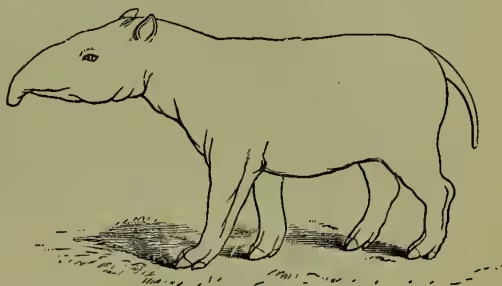
It is supposed that animals of this genus dwelt on the margins of lakes and rivers, and that their habits were similar to those of the tapir.