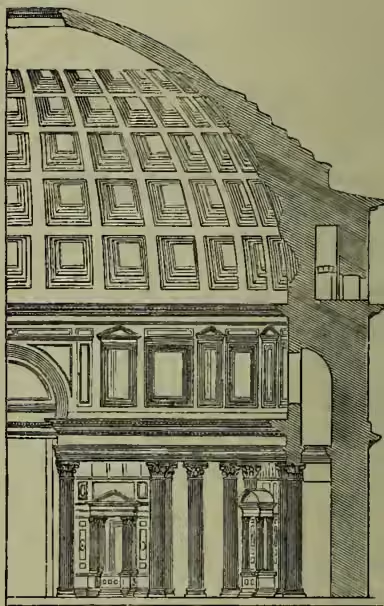
Pantheon (Gr. pan'theion), a temple built in a modified Corinthian style with a great vaulted roof, dedicated to all the gods. The 'Pantheon' of Rome is the only ancient edifice in Rome that has been perfectly preserved, and is lighted through one aperture in the centre of its magnificent dome. It is commonly said to have been erected by Agrippa in 27 B.C.; but recent investigations show that the temple of Agrippa was destroyed by fire with the exception of the portico, and that the present Rotonda is the work of Hadrian. In 610 it was consecrated as a church—Santa Maria Rotonda. Under Pope Urban VIII. the architect Bernini erected on it two little campaniles, called in derision his 'ass's ears,' which have again been removed. The church is used as a place of sepulture for great Italians. See ROME, ROMAN ARCHITECTURE.—For the Panthéon at Paris, see PARIS, p. 764.