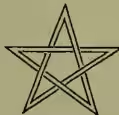
Pentacle, or PENTAGRAM, a five-pointed figure of the form shown on the annexed illustration, which occurs on old Greek coins, and was used as a symbol of mystery, perfection, or of the universe by Pythagoreans, Neoplatonists, and Gnostics. It occurs on Abraxas Stones (q.v.), and was used as the device of various secret societies, some of them masonic, and hence appears in ecclesiastical architecture (as at Rouen). The 'wizard pentagram' was, in the middle ages, a symbol powerful in repelling evil spirits, and is familiar to readers of Goethe's Faust. On the doors of cow-houses it was held to keep off witches. The pentacle, also called pentalpha, is often confused with the hexagram, composed of two equilateral triangles, which was also used as a magic symbol in astrology, alchemy, and cabalistic lore. See CIRCLE (MAGIC).