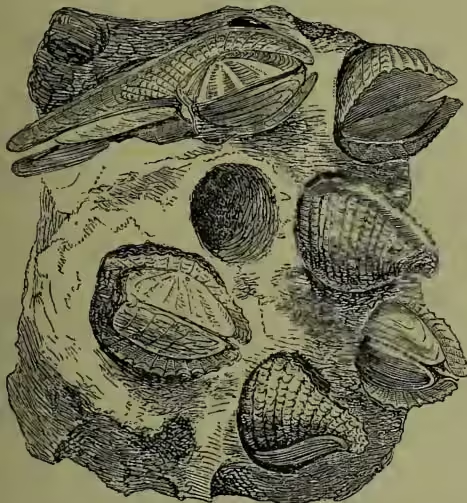
Pholas, a genus of marine boring bivalves, of the family Pholadidae. The shell is thin but hard, gapes at both ends, and has accessory valves. The two principal valves are beset with inequalities, producing a rasp-like structure. Chiefly by means of the foot, but in a manner incompletely understood, these boring molluscs make cylindrical holes in the rocks or in wood. Over thirty living species are known—e.g. the common Pholas dactylus, popularly known as the piddock, and the datolo di mar of the Italian markets. It is used both for food and bait. The allied genus Pholadidea is also represented on British coasts, and so is the wood-boring Xylophaga. To the family Pholadidae also belongs the ship-worm, or Teredo (q.v.). See also BORING-ANIMALS.