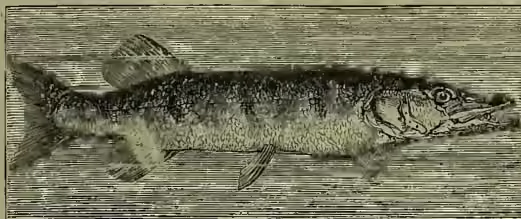
Pike (Esox lucius), a well-known fresh-water fish abundant in the temperate parts of Europe, Asia, and America. The body is long and covered with small cycloid scales; the dorsal fin is near the tail; the mouth is large, with strong, sharp teeth; the lips have no barbels; the stomach is without the usual pyloric appendages; the open (physostomatus) air-bladder is simple; the gill-aperture is very wide. The fish is olive-gray above, silvery white on the belly, and is mottled with pale spots; in length it may measure from 2 to 4 feet; and it may attain a weight of 10 to 20 lb., or in rare cases, it is said, about 60. The genus includes besides four or five other species, notably the Muskallunge of the North American lakes, a 'grand game fish,' often 6 feet long, in habit a dauntless marander. Another of smaller size (Esox reticulatus) is the common Pickerel of the eastern states. All three are valuable food-fishes.
The common pike or Jack (Scotch Godd) is said to spawn when three years old. The ova are usually laid in March, but the spawning is protracted. There is great mortality among the young, which take about a week to hatch. Growth is at first rapid, and continues more slowly for years. The longevity of the fish is great, but the records of pike which have attained to 250 years are as unsatisfactory as the evidence for longevity usually is. There is no doubt, however, that they may outlive their keepers; and it is also true that they sometimes venture ashore, and that they sometimes lie in a torpid slumber in the pools. But the most characteristic quality of pikes is voracity. Feeding for the most part on frogs and small fishes, they are often prompted by hunger to bid for higher game, such as ducks, geese, water-hens, and water-rats. Thoreau describes the pike as the 'swiftest, coarsest, and most ravenous of fishes, which Josselyn calls the river-wolf. It is a solemn, stately, ruminant fish, lurking under the shadow of a lily-pad at noon, with still, circumspect, voracious eyes; motionless as a jewel set in water, or moving slowly along to take up its position; darting from time to time at such unlucky fish or frog or insect as comes within its range, and swallowing it at a gulp. Sometimes a striped snake, bound for greener meadows across the stream, ends its undulatory progress in the same receptacle.' The Bony Pike (Lepidosteus) is a Ganoid, and the name is sometimes applied to the marine Gar-fish (Belone) and to some American perches. See BONY PIKE, GAR-PIKE.
See the articles ANGLING and PISCICULTURE; Pennell's Book of the Pike (3d ed. 1884); and Bickerdyke's Angling for Pike (1888).