Poodle. The origin of this breed of dog dates from the beginning of the 17th century or earlier, as many pictures of that time contain portraits of poodles. The breed was unknown in Britain until the beginning of the 19th century. The poodle is one of the few breeds of dogs which has not been properly appreciated and cultivated in Britain. From his great intelligence and cleverness in learning tricks, he was generally adopted as a circus or 'trick-dog'; but this fact, instead of making for his credit, has caused the poodle to be treated with contempt. On the Continent, however, the large variety of poodle has been universally used as the humbler sportsman's companion, as he combines the properties of a land as well as a water dog.
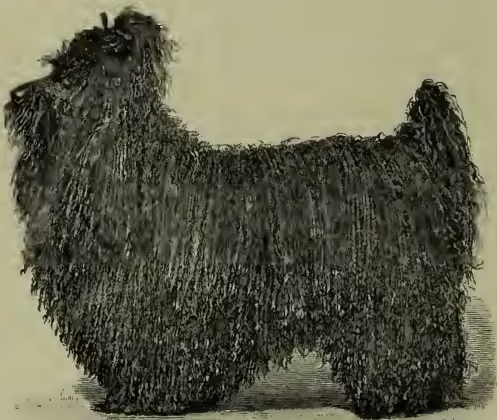
(From a Photograph by Gambier Bolton, F.Z.S.)
The poodle varies considerably in his appearance, and attempts have been made to divide the breed into several sections, such as the large and small variety, or the corded-coated and fleecy-coated variety, as also into black Russian and white German poodles; but none of these divisions are very clearly defined. The large black Russian poodle is much the most handsome and agile specimen of the race, and may be easily trained to retrieve. The small white poodle is only fit for a house dog, but is extremely clever and apt. For some unknown reason the poodle has always been clipped in a peculiar manner: with the exception of a few tufts, his body and hindquarters are entirely bare, while the coat on his shoulders sometimes grows to an enormous length. On the Continent the poodle is left with his natural coat during the winter, a much more humane plan than the English habit of keeping him shaved in all seasons.