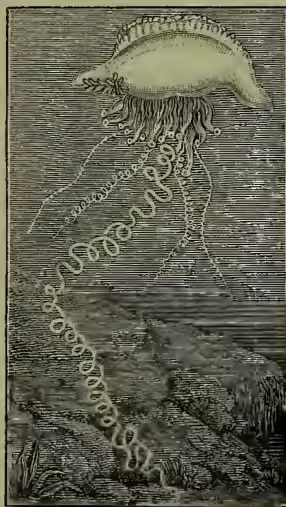
Portuguese Man-of-War (Physalia), a remarkable genus in the class Cœlenterata, in the snb-class Siphonophora. It is common in tropical seas, floating on the surface with an inflated brightly coloured bladder, sometimes 6 inches in length, and with a pendent colony of individuals, among which there is no little division of labour. Most important are the nutritive and reproductive members, and long stinging tentacles which stream for several feet into the water. The stinging power, normally used in benumbing the small animals on which the floating colony feeds, is sufficient to cause intense irritation in those who incautiously test it. The Physalia floats for the most part passively, and is occasionally driven to British coasts. An allied genus, Rhizophysa, is even more remarkable, with a large float and long stem.