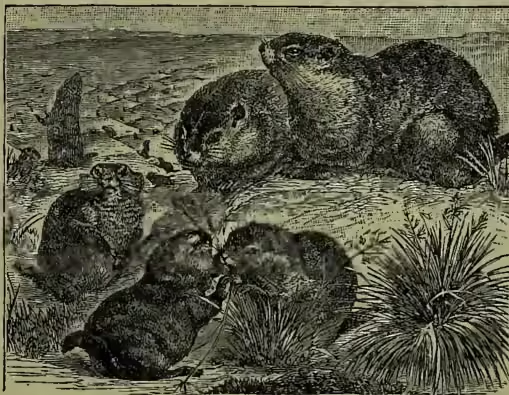
Prairie Dog (Cynomys Ludovicianus) is a small rodent closely allied to the European Marmot (q.v.); these animals have received their vernacular name on account of the barking sound which they utter. They live associated together in colonies consisting of numerous burrows excavated by the animals themselves; their range is entirely restricted to the parks and plains of the Rocky Mountain plateau region in North America, and there appear to be two distinct varieties. They have been popularly supposed to share their habitations, and to live in friendly relations, with rattlesnakes and owls. As regards the rattlesnake, it is more than probable that its occurrence in the burrows of the rodent is to be explained by a desire to make a meal of its neighbours, while the owl may have a similar purpose in view; it is also possible in both cases that the burrows may be merely utilised as a temporary hiding-place. The Prairie Marmot is rather larger than a large rat, and is of a brownish-gray colour, the under surface grayish white.