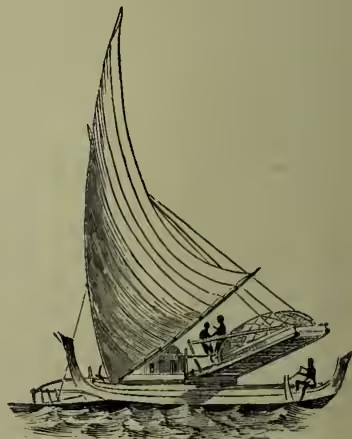
Proa (Malay prahu), sometimes known as the 'flying proa,' is a peculiarly-shaped canoe in use by the natives of the Malay Archipelago, and on the China Seas, especially by the Ladrone islanders. It is about 30 feet in length by 3 in width, and has the stem and stern equally sharp, so as to sail backward or forward without being turned round. One side is flat, and in a straight line with the stem and stern; the other side is rounded, as in ordinary boats. This peculiar formation would make it liable to be easily upset, were it not for a framework which projects to windward, supporting a weight which counterbalances the pressure of the wind on the sail. The sail resembles the ordinary lug-sail, and is formed of mat. Slight variations from this form are found, but the principle of construction is the same.