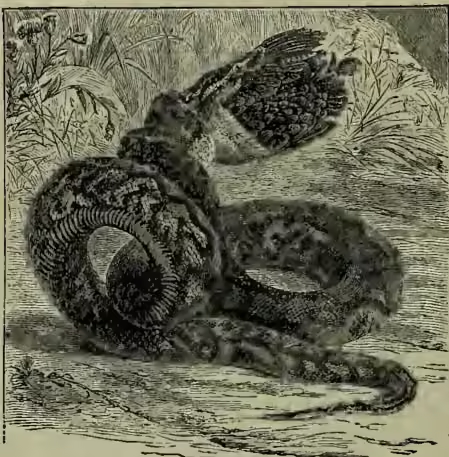
Python, a name applied to several large serpents, especially of the genus Python, which inhabit tropical Asia, Africa, and Australia, and closely resemble both in structure and habit the Boas of the New World. The body is rarely 20 feet in length, usually indeed nearer 10, though often estimated at 40; it is plump and very muscular; the tail is prehensile; there are beside the anns two rudimentary hind limbs or 'spurs,' which have perhaps a sexual function besides being of use in climbing. The pythons usually lurk near water, among the herbage or on an overhanging tree. They seize small mammals, strange and crush them in their coils, and swallow them slowly. They do not cover them with saliva before beginning to swallow them, reports to this effect being inferences from the appearance of the occasionally disgorged prey. After a heavy meal the serpents are very lethargic. 'The animals on which the pythons ordinarily feed are seldom larger than a small dog, and though they may seize and overpower animals as large as a goat, to swallow them "horns and all" is absolutely impossible.' We must allow for about fifty per cent. of exaggeration in almost all the popular stories about pythons. It is true, however, that the mother reptile coils herself around her pile of eggs and incubates them for about three months. Among the pythons are the following: the Netted Python (P. reticulatus) of the Malay Archipelago, Burma, and Siam; P. molurus, the Adjiger of the Hindus; P. regia, the Royal Rock-snake of West Africa; P. nutalensis, the Natal Rock-snake; P. sebae, the 'fetich' snake of tropical Africa; and several Australasian genera—e.g. Morelia, Aspidiotes. See ANACONDA, BOA.