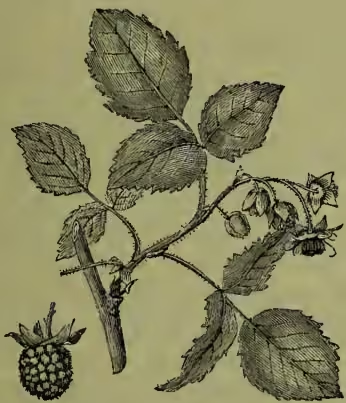
Raspberry (Rubus Idæus), the most valued of all the species of Rubus (q.v.). The characters of the leaves, flowers, and fruit of raspberry are well illustrated in the accompanying figure. The wild raspberry has scarlet fruit, and is found in thickets and woods throughout the whole of Europe and the north of Asia. It is common in Britain. The raspberry has long been in cultivation for its fruit. There are many cultivated varieties, with red, yellow, and white fruit, much exceeding the wild kind in size. The root is creeping, perennial; the stems only biennial, bearing fruit in the second year, woody, but with very large pith. Plantations of raspberries are most easily made by means of suckers. The raspberry loves a light rich soil, and is rather partial to a shady situation. The tall kinds are unsuitable in situations much exposed to winds, as the stems are easily broken. The rows are generally about 4 feet apart, the plants 3 to 4 feet apart in the rows. The young stems are thinned out to allow free access of air to those which are left. Stakes are often used to support the stems, or they are variously tied together. The fruit is used for dessert; for jams, jellies, &c.; for making or flavouring many kinds of sweetmeats; and, mixed with brandy, wine, or vinegar, for the preparation of Raspberry Syrup, Raspberry Vinegar, &c. Different preparations of it are used in medicine in cases of fever, inflammation, &c. Raspberry vinegar is a particularly grateful and cooling drink in fevers. Raspberries, fermented either alone or along with currants and cherries, yield a strong and very agreeable wine, from which a very powerful spirit can be made. Some of the other species of Rubus most nearly resembling the raspberry produce also agreeable fruits. R. odoratus is a highly ornamental shrub, a native of Canada and the northern states of America, is frequent in gardens in Europe and America, but rarely produces fruit in Britain.