Rattlesnake (Crotalus), a genus of highly specialised venomous snakes, with a rattle of horny rings at the end of the tail. A long fang is borne on each maxilla, and is perforated by a canal, down which the venomous secretion of a modified salivary gland flows when the rattler strikes. Behind each fang are several reserve fangs, which replace it after breakage—a not unfrequent result of the bite. There are about fifteen species, exclusively American. Of these the Banded Rattlesnake (C. horridus) is abundantly distributed from Maine to Texas. Its maximum length seems to be about four feet, and the rattles have been known to consist of twenty-three rings, but forms and rattles so large are very rare. The predominant colour of the body varies from yellow to almost black. Among the other species are C. durissus (Mexico to Brazil), C. molossus (Mexico and Arizona), C. lucifer (California and other western regions), the Diamond Rattler—C. adamanteus (California and Mexico), the Horned Rattler—C. cerastes (California, Arizona, and Mexico).
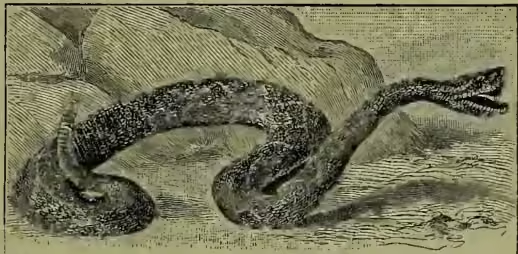
Rattlesnakes are naturally sluggish and prefer defensive to offensive tactics, except when on the track of their natural prey—rabbits, rats, squirrels, and other small mammals. Not a few ideas about rattlesnakes must be dismissed as false: they do not fascinate or charm mammals or birds, though these may be overcome by an almost paralysing fear; the rattling does not lure prey nor attract mates, but is rather a reflex expression of excitement, apparently warning off molesters on whom the snake is doubtless unwilling to expend energy in the exhausting act of striking; finally, the number of rings does not necessarily indicate the age of the animal, though new rings seem to be added at successive sloughings. Rattlesnakes are generally nocturnal. The young are brought forth alive. The poison is very deadly, rapidly paralysing the nerve-centres and affecting the respiratory and circulatory functions. When a man is bitten it is customary to ligature above the wound, to suck out the poison, to use stimulants freely, and to inject antidotes such as permanganate of potash. Often, however, the result of the bite is fatal (see SNAKE).