Reredos (Fr.), the wall or screen at the back of an altar. It is usually in the form of a screen detached from the east wall, and is adorned with niches, statues, &c., or with paintings or tapestry. In some cases it is attached to the east wall and is of great size, covering the whole of the wall, as at All Souls College, Oxford. That splendid 15th-century reredos had been plastered over at the Reformation, but was discovered and restored in 1872-76. In Durham Cathedral is a very fine example of a reredos in the form of a detached screen; it was brought by sea to Newcastle from London by Lord Neville in 1380, being perhaps of French workmanship, and was restored in 1846. The lofty reredos (c. 1480) at St Albans, dividing the presbytery from the retro-choir, is of the same type and age as that at Winchester.
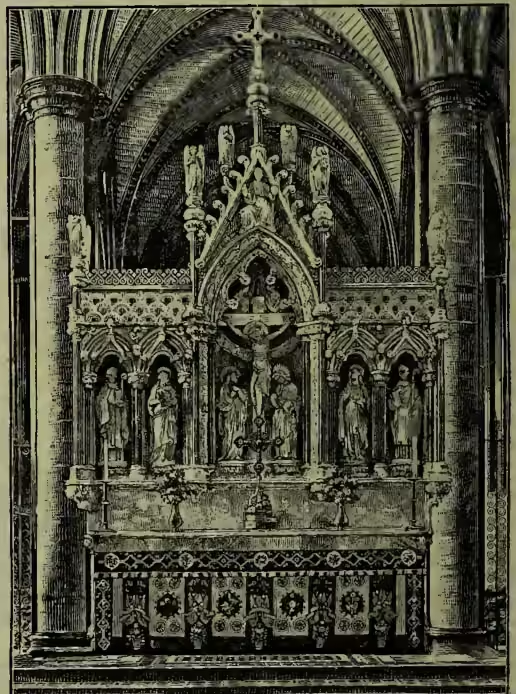
Reredoses have frequently been erected in the later half of the 19th century, a good example being that of Salisbury, designed by Sir G. G. Scott, and erected in 1875 at the cost (£1800) of Earl Beauchamp to take the place of one demolished about 1790 by Wyatt. Owing to the imagery they contain, they have been the subject of controversy in the Church of England—e.g. in the case of the Exeter reredos (1873-75), and of that of St Paul's (1889-91), both of which were allowed, after frequent appeal, to remain.