Rococo

Chambers's Encyclopaedia, Volume 8: Peasant to Eoumelia, p. 758
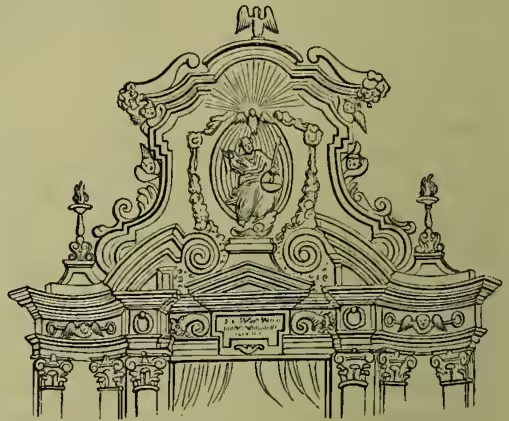
A detailed black and white illustration of a Rococo-style altar. The altar is highly ornate, featuring a central oval medallion depicting a religious scene, possibly the Annunciation. The medallion is surrounded by elaborate, scrolling carvings and floral motifs. Above the medallion is a small eagle. The altar is supported by four ornate legs and has a decorative base. The overall style is characteristic of the Rococo period, with its emphasis on intricate, flowing, and symmetrical ornamentation.
Rococo Ornament.

Rococo, or Rocaille, a name given to the very debased style of architecture and decoration which succeeded the first revival of Italian architecture. It is ornamental design run mad, without principle or taste. The ornament consists of panels with their mouldings broken or curved at the angles, and filled with leafage, shell-work, musical instruments, marks, &c. This style prevailed in Germany and Belgium during the 18th century, and in France from the time of Henry IV. to the Revolution. The illustration shows an example from an altar in the church of St James, Antwerp.

Source scan(s): p. 0769