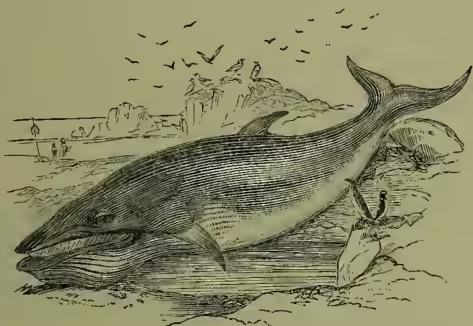
Rorqual (Balænoptera), a kind of baleen whale, to which the names of Fin-back, Finner, and Razor-back are also applied. The genus includes the largest and some of the commonest whales, and is represented in all seas. The head is flat and pointed, the body is slender, the skin of the throat is deeply folded in longitudinal plaits, the whalebone is short and coarse, and there is not much blubber. The 'blue whale' (B. sibbaldii), the largest living animal, may attain a length of 80 or 85 feet. It seems to pass the winter in the open sea, and approaches the coast of Norway at the end of April or beginning of May, and is sometimes stranded on British coasts—for instance, in the Firth of Forth. The Common Rorqual (B. musculus) attains a length of 60 to 75 feet, and it often comes ashore on British coasts. Rudolph's Whale, or Northern Rorqual (B. borealis), does not exceed 50 feet in length; and yet smaller is the Lesser Rorqual (B. rostrata), which measures about 30 feet. The former is not uncommon in the more northern seas, while the range of the latter extends from the Mediterranean to Davis Straits. The rorquals seem to feed on small crustaceans, and sometimes on small fishes. Though not nearly so valuable as species of Balaena, they are often captured by the whalers. See WHALE.