Rosemary (Rosmarinus), a genus of plants of the natural order Labiatae, and nearly allied to Sage (Salvia), from which it differs in its filaments having an awl-shaped tooth, directed downwards a little above the base. Only one species is known, R. officinalis, an evergreen erect shrub of 4 to 8 feet high, with linear leaves, and pale bluish flowers, growing in sunny places, on rocks, old walls, &c., in the countries around the Mediterranean Sea, and cultivated elsewhere as an ornamental and aromatic shrub. The leaves have a short whitish-gray down beneath, a penetrating camphor-like odour, and a pungent aromatic and bitter taste. They contain a large quantity of an essential oil, Oil of Rosemary, which is not unfrequently used as a stimulating liniment, to promote the growth of the hair, and as a perfume. Spirit of Rosemary, made by distillation of sprigs of rosemary with rectified spirit, is used to give a pleasant odour to lotions and liniments. Rosemary has been advantageously administered internally in cases of chronic diarrhoea, and of a relaxed state of the system.—
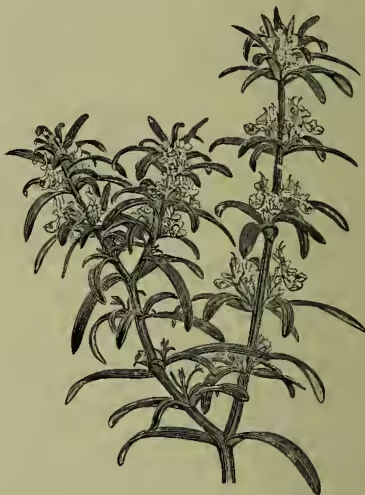
(Bentley and Trimen.)
Oil of Rosemary is a principal ingredient of the perfume called Hungary Water. The celebrated white honey of Narbonne owes its reputation to being collected from the flowers of rosemary. In some places, by a confusion of similar names, the totally distinct plant Costmary (q.v.) is called Rosemary. The name Wild Rosemary is given to Ledum palustre, a shrub with narcotic acrid properties.