Salsify, or SALSAFY (Tragopogon porrifolium), a biennial plant growing in meadows throughout
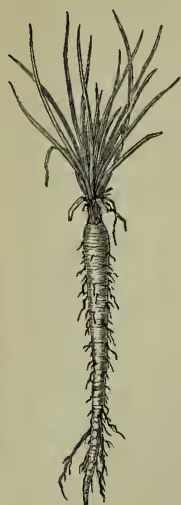
Europe, locally indigenous in the south-eastern counties of England, cultivated in gardens for the sake of its root, which is used in the same manner as the carrot, and is very delicate and pleasant, with a flavour resembling asparagus or scorzonera. Cooked in a certain way it somewhat resembles the oyster in flavour, hence the popular name Oyster Plant. The root is long and tapering, and in cultivation white and fleshy, with much white milky juice; the stem 3 to 4 feet high, with smooth and glaucous leaves, which resemble those of the leek; the flowers are of a dull purple colour. The seed is sown in spring, and the root is ready for use in winter. Next spring, when the flower-stalks are thrown up, they are used like asparagus. The genus
Tragopogon belongs to the natural order Compositeæ, sub-order Cichoraceæ. The Yellow Goat's Beard (T. pratensis), a native of Britain, was formerly cultivated in England for its roots, which are similar in quality to salsify. Scorzonera is sometimes called Black Salsify.