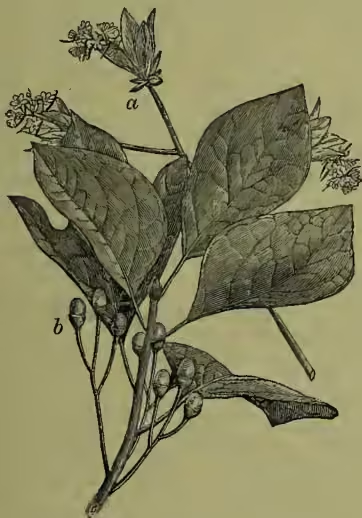
a, branch of male tree in flower; b, branch with ripe fruit and developed foliage. (Bentley and Trimen.)
Sassafras (Sassafras), a genus of trees or shrubs of the natural order Lauraceæ. The Sassafras-tree (S. officinale) of North America, found from Canada to Florida, a mere bush in the north, but a tree of 50 feet in the south, has deciduous leaves, yellow flowers, which appear before the leaves, and small dark-blue fruit. The wood is soft, light, coarse in fibre, dirty-white and reddish brown, with a strong but agreeable smell, resembling that of fennel, and an aromatic, rather pungent and sweetish taste. The wood of the root possesses these properties in a higher degree than that of the stem, and the thick spongy bark of the root most of all. The wood is brought to market in the form of chips, but the bark of the root is preferred for medicinal use, is a powerful stimulant, sudorific, and diuretic, and is employed in cutaneous diseases, gout, rheumatism, and syphilis, generally in combination with other medicines. It contains a volatile oil, Oil of Sassafras, which is often used instead. An agreeable beverage is made in North America by infusion of sassafras bark or sassafras wood; and a similar drink was once commonly sold in the streets of London under the name of Saloop. The leaves of sassafras contain so much mucilage that they are used for thickening soup.—Another species of Sassafras (S. parthenoxylon), possessing similar properties, is found in Sumatra; and the name, with or without explanatory prefixes, is given to trees of various orders found in Victoria, New South Wales, Tasmania, Brazil, and Chili.
SASSAFRAS NUTS, a name given to the ootyle- dons of the seed of the South American tree Nectandra puchury, used as medicinal aromatics. They are also called Pichurim Beans and Brazilian Beans.