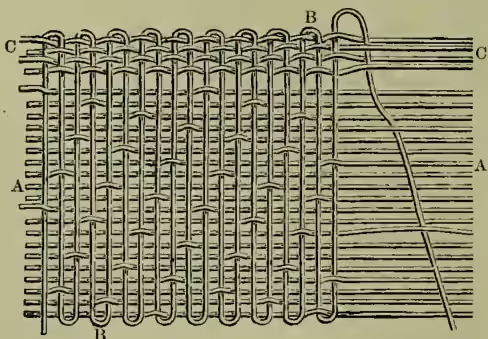
Satin, a fabric in which so much of the weft is brought uppermost in the weaving as to give a more lustrous and unbroken surface to the cloth than is seen when the warp and weft cross each other more frequently; this will be better understood by reference to the figure than by any verbal description. A are the warp threads, of which only every tenth one is raised to allow the shuttle to pass, but they are all raised in regular succession, so that the weaving is quite uniform throughout; B are the weft threads; and C is the selvedge, which is formed on each side of the piece of stuff by the regular method of plain weaving—that is, by raising every other warp thread for the passage of the weft. The figure shows a ten-thread satin twill, but there are various others made, such as a five, a six, a seven, and an eight-thread satin. The lowest satin twill that can be produced is a four-thread, which is sometimes called the satinet twill. The term satin is rarely applied to other than silk textiles (see SILK). A cotton, and sometimes even a woolen, fabric woven in the way described is called satcen.