Scales, MATHEMATICAL. Maps, estate plans, architectural, engineering, and other proportionate drawings are made to scale. An inch, for example, of the scale may represent a foot, yard, mile, or other length of the space to be shown. The first thing to be determined is the representative fraction, which shows the ratio between the scale and the object it represents, and should always be given with the scale. If the scale is to be of 1 inch to 8 miles, as there are 506,880 inches in 8 miles the representative fraction will be , which is usually printed on maps 1:506880. From this fraction a workable length of scale is easily found.

Suppose a scale showing 20 miles would be convenient to work from; as there are 1,267,200 inches in 20 miles, the proportion would be . But this result is usually more readily arrived at by taking the proportion of the original lengths instead of using the representative fraction. Thus, . To make the scale, draw a line inches long. This line represents 20 miles. Bisect it, and each half shows 10 miles. Subdivide the half to the left into ten equal parts, and each of these tenths stands for 1 mile. This is a simple scale ready for use, and how it is usually drawn and figured is shown in fig 1.
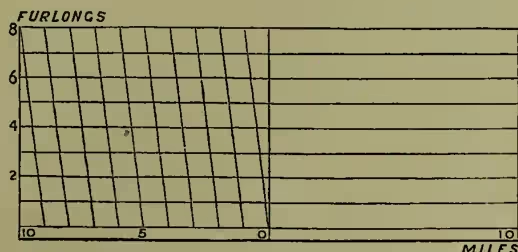
The diagonal scale is a vertical subdivision over the simple one, and is an application of the principle in geometry that the sides about the equal angles of equiangular triangles are proportional. Suppose the further subdivision of miles into furlongs were required. Draw above the simple scale eight parallel lines at equal distances from each other (fig. 2). From its ends and point of bisection draw perpendiculars to the eighth of these parallel lines. Subdivide the left half of the eighth line as the same half of the simple scale is subdivided. Join the first subdivision of the uppermost line from its bisection with the point of bisection of the simple scale, and draw lines parallel to this one from the other nine points of subdivision. The space between the bisecting line and the diagonal nearest it on the first parallel shows one furlong, the space above it two, and so upwards according to the geometrical principle stated. Suppose 16 miles 6 furlongs were to be measured. Put the one leg of the divider on the right end of the sixth parallel line and the other where the diagonal line sixth from the centre cuts that parallel, and the length required is found. The diagonal scales on mathematical rules are generally engraved with ten parallel lines, so as to give subdivision of tenths, this being the most generally useful proportion.
The comparative scale involves no new principle. It is a scale drawn in a different denomination to the same representative fraction. A scale in leagues comparative to the scale in miles would be three times as long itself and in each of its subdivisions; and if the comparative scale were drawn to the same number of units it might be inconveniently long or short. Thus, a comparative scale showing 20 leagues to the representative fraction given above would be 7·5 inches, which might be too long for working purposes or to be exhibited in print or on the plan. But it is not necessary that the same number of units in the larger or smaller denomination be taken; and the length of scale for a convenient number is easily found by proportion. Thus, in a scale 40 Russian versts are represented by 4·5 inches; draw a comparative scale in English miles. Show 20 miles. Take the verst roundly as 1167 English yards. There are 1760 yards in a mile. In 40 versts there are 46,680 yards; in 20 miles, 35,200 yards. Then . This line 3·4 represents 20 miles to the same representative fraction as the Russian scale of versts, and it can be divided and subdivided like the simple and diagonal scales above.