Schooner is a swift, sharply-built vessel, carrying usually two masts, though occasionally a greater number, and commonly is of small size.
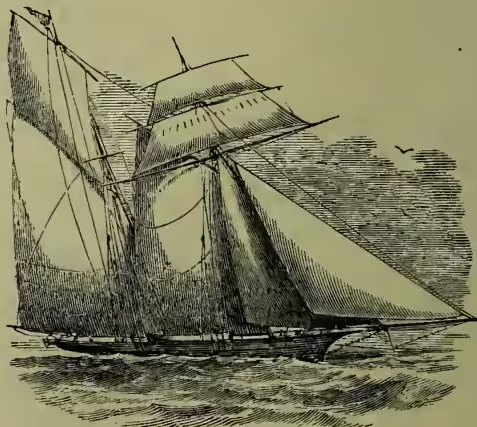
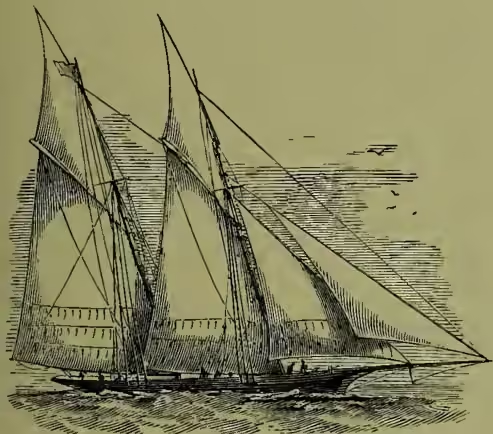
There are two classes of schooners—the 'fore-and-aft schooner,' or schooner proper, and the 'topsail schooner.' In the former both foremast and mainmast are rigged like the mainmast of a cutter, with fore-and-aft Sails (q.v.). In the latter the foremast carries a square topsail and a square topgallant-sail. Topsail schooners, though carrying no square foresail, have a squaresail for running free which sets from the deck. On a wind the former rig has a great advantage, as the schooner can sail up within or even 4 points of the wind; but before the wind the square topsail gives the advantage to the topsail schooner; and as the latter can on occasion strike her squaresails, and set a fore-and-aft topsail in their place, she has usually the preference. No sailing-vessel is faster than a schooner of fine build when she carries ample canvas; hence it is a favourite form for the larger class of Yachts (q.v.), and before the introduction of steam despatch-vessels was employed much in the packet service. Schooners are still employed to a great extent in the merchant service for running small cargoes, and especially those of perishable goods, as fish or fresh fruit. They are easily managed by a small crew, but, from the sharpness of their build, have no great amount of stowage.