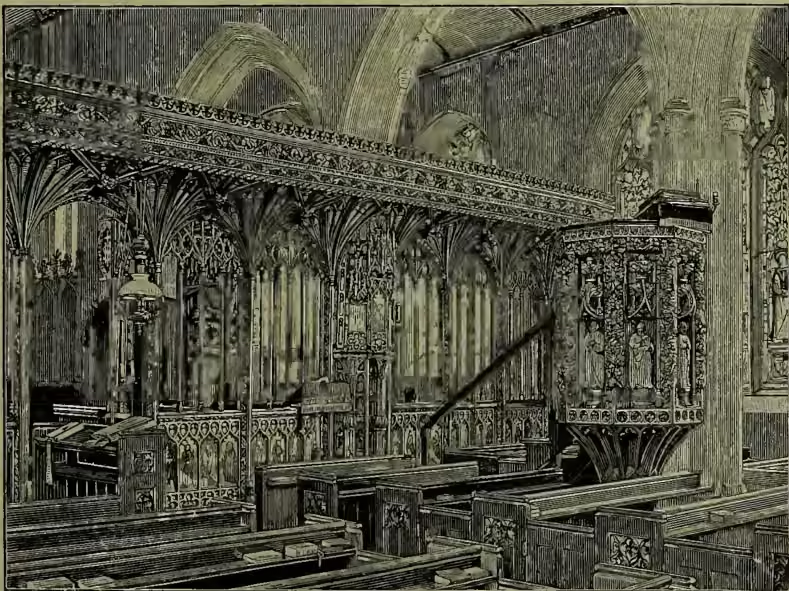
Screen, in Architecture, an enclosure or partition of wood, stone, or metal work. It is of frequent use in churches, where it shuts off chapels from the nave, separates the nave from the choir, and frequently encloses the choir all round. Such choir-screens are sometimes much ornamented, the lower part being solid, and the upper very often perforated. The rood-screen (see ROOD) is that on which most labour is usually bestowed. It derives its name from the rood or cross which stands, or in churches now Protestant once stood upon it. The rood screen usually forms the division between the nave or transept and the choir. It has generally an ornamental gateway in the centre.
In Catholic churches it may have an altar at each side, and is frequently a structure of some size, with a staircase leading to the rood-loft on the top, where the cross or crucifix stands conspicuous at the entrance to the choir. The loft is also used for certain religious functions and ceremonies. In England many beautifully carved screens in stone, enriched with pinnacles, niches, statues, &c., remain, such as those of York, Lincoln, Durham, &c.; and specimens in wood, carved and painted, are common in parish churches, that at Harberton, near Totnes, which is represented in our illustration, being one of the finest in the kingdom. In France the screen round the choir is sometimes the subject of beautiful sculptures, as at Amiens and Paris. In halls of castles and mansions there was usually a wooden screen at one end to separate the entrance-door and a passage from the hall. Over this was a gallery. The term 'screen of columns' is also applied to an open detached colonnade.