Serpula, a genus of sedentary Chaetopod worms, living in twisted calcareous tubes fastened to shells and rocks in the sea, or even to other animals, such as crabs.
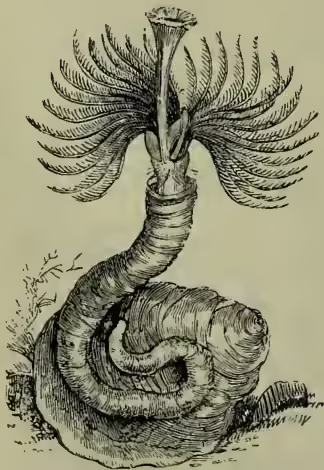
From the mouth of the tube the head of the worm is stretched out into the water, and bears numerous exquisitely coloured gills and a stopper or operculum which closes the mouth of the shell when the head is retracted, and seems also to help in respiration. The colour of the gills is in great part due to the blood which is seen through the thin skin. The food consists of minute organic, and especially vegetable, particles, which are wafted into the mouth by the cilia on the gills. The process by which the worm makes its tube of lime is not clearly understood; it is interesting to observe that in situations where the light comes in one definite direction the calcareous tubes point that way. Several species of Serpula are common on British coasts, and large forms of this genus and of nearly related genera are common in warmer seas.