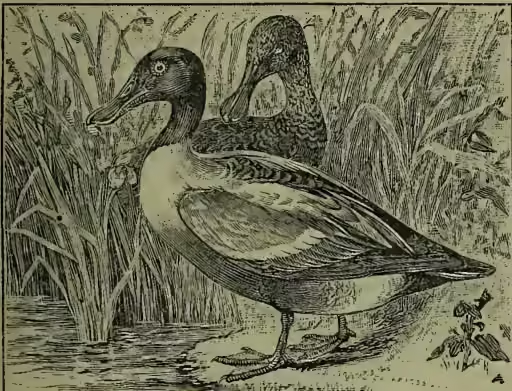
Shoveler (Rhynchaspis or Spatula), a genus of birds of the duck family, Anatidae, having the hind-toe small, free, and unloded; and remarkable for the expansion of the end of the mandibles in adult birds, particularly of the upper mandible.
The lamellæ of the mandibles are long and very delicate. The legs are placed near the centre of the body, so that these birds walk much more easily than many of the ducks. The Common Shoveler (R. clypeata) is smaller than the wild duck, but rather larger than the widgeon. The shoveler is a visitant to the British Isles, especially during cold weather. A few remain all the year. It is widely distributed over North Africa, Europe, Asia, and North America. It is reported as having been found in Australia. Its nest is made of fine grass, with a lining of down, on dry ground on the borders of rushy lakes. The eggs, from eight to fourteen in number, are of a pale greenish buff colour. Its food consists of grasses, worms, slugs, snails, insects, and small crustaceans. Its flesh is well flavoured and very highly esteemed. The bird is often called Broad-bill.