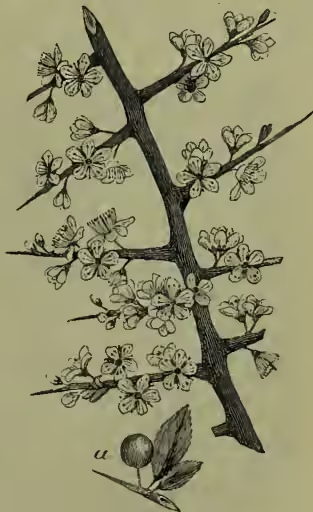
Sloe, or BLACKTHORN (Prunus spinosa), a shrub of the same genus with the plum, and perhaps really of the same species with it and the bullace. It is generally a shrub of 4 to 10 feet high, but sometimes becomes a small tree of 15 to 20 feet. It is much branched, and the branches terminate in spines. The youngest shoots are covered with a fine down. The flowers are small, snow-white, and generally appear before the leaves. The fruit is ovate, or almost globose, pale blue with blackish bloom, and generally about the size of the largest peas. The sloe is abundant in thickets and borders of woods and hedgerows everywhere in Britain and almost all parts of Europe. The shoots make beautiful walking-sticks. Being spiny, the sloe is sometimes planted as a fence against cattle; but the roots having a habit of spreading and sending up suckers, hedges of it are troublesome to keep from encroaching on the fields. The bark is bitter, astringent, and tonic. The flowers, with the calyx, are purgative, and were once a favourite domestic medicine. The leaves are used for adulterating tea. The unripe fruit dyes black. The fruit, which is very austere, may be made into a preserve; and from it a kind of brandy may be extracted. An astringent extract of it, called German Acacia, was once much employed in cases of diarrhoea. The juice has been used to impart roughness to port wine and in the fabrication of spurious port. The sloe of the southern United States (P. umbellata) has a pleasant black or red fruit.