Snow-bunting, or SNOWFLICK (Plectrophenax nivalis), a bird of the Finch family (Fringillidae), Bunting sub-family (Emberizinae), abundant in summer in the Arctic regions generally, where it has been found nesting nearly as far north as man has reached; in winter migrating southwards to
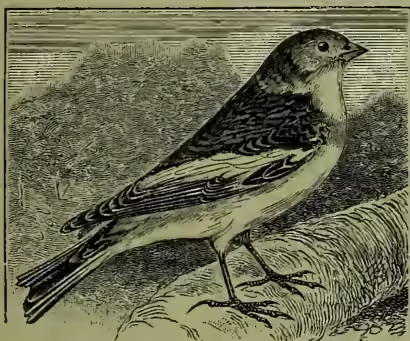
Georgia in North America, to Japan, northern China, Turkestan, southern Russia, the northern shores of the Mediterranean, and Morocco. In Iceland it abounds all the year round; in the Faroes it is common in winter, and many remain to breed; in the British Isles it occurs in large flocks in winter, and it has also been found nesting on high mountains in Sutherland and in the Shetlands. It is a bird about 6½ inches long; plumage black and white; bill, legs, and feet black; but in autumn the feathers of the upper parts are broadly edged with dull chestnut, the bill is yellow with a black tip, and the bird is then known as the Tawny Bunting. In habits it differs in several respects from the true bunttings: it runs rapidly on the ground, it also hops, and not infrequently perches on trees; and the song of the male while the female is on the nest is a low, melodious warble. The food in summer consists of insects, in winter of seeds. The nest, made of dry grass and moss, and lined with hair and feathers, is in northern breeding haunts placed on the ground not far above the sea-level; but in more southern latitudes it is generally built in rocks on the rugged sides of mountains. The snow-bunting is generally very fat, and is highly esteemed for the table. The Greenlanders kill great numbers, and dry them for winter use. See the article BUNTING.