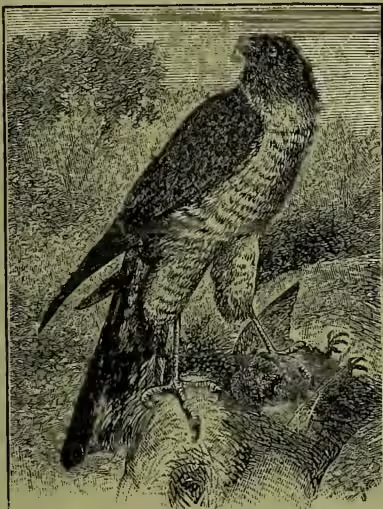
Sparrow-hawk (Accipiter), a genus of long-legged, short-winged falcons, nearly allied to and closely resembling the goshawks, but distinguished from them by their smaller size, weaker bill, and long, slender middle toe. The genus is represented in almost all parts of the world. The Common Sparrow-hawk (A. nisus), notwithstanding the constant war waged against it by gamekeepers, is still comparatively abundant in wooded districts throughout Great Britain and Ireland. It nests in trees, sometimes building a nest of its own, sometimes adopting one deserted by a crow or other bird. The eggs, four to six in number, are laid early in May, and are of a bluish-white colour marked with reddish brown. The food of the sparrow-hawk ordinarily consists of small birds, which it takes while on the wing, but when rearing its brood it often commits great havoc among young game-birds and poultry. The adult male measures 12 inches, and has the upper parts of the body bluish gray, the under parts buff-coloured, with bright rufous bars. The female is paler in colouring and measures about 15 inches. The sparrow-hawk was used in falconry, but its feebler powers of flight made it of less value than the true falcons. It is bold and active, however, and is still often trained to take partridges and small birds; and it is recorded that a single trained sparrow-hawk took 327 birds in less than two months. The American Sparrow-hawk (Falco sparverius) is similar in size to the European, but is more nearly allied to the kestrel.