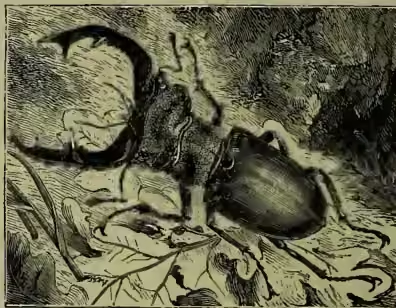
Stag-beetle (Lucanus), a genus of Lamellicorn beetles, nearly allied to the Scarabees. The males are remarkable for the large size of their mandibles, the branching of which in L. cervus and L. elaphus has suggested stags' antlers. The common European Stag-beetle (L. cervus) is a large formidable-looking insect, the males being fully 2 inches long, and able to give a sharp bite with their strong mandibles. It flies about in the evening in the middle of summer, chiefly frequenting oak-woods. The larva feeds on the wood of the oak and willow, and is injurious to the trunks of trees, into which it eats its way very rapidly. It is supposed by some to be the Cossus of the ancient Romans, much esteemed by them as a delicacy. It lives for several years before undergoing its transformations (see BEETLE). In most species of Lucanus, and of the nearly related genus Passalus, are some shade of brown, but the tropical forms are often brilliant.