Amanita, a genus of Hymenomycete Fungi, nearly allied to the mushrooms (Agaricus). Several of the species are edible, notably the delicious Orange (A. caesarea), but the majority are poisonous. A. muscaria, which is pretty common in woods, especially of fir and beech, in Britain, is one of the most dangerous fungi. It is sometimes called Fly Agaric, being used in Sweden and other countries to kill flies and bugs, for which
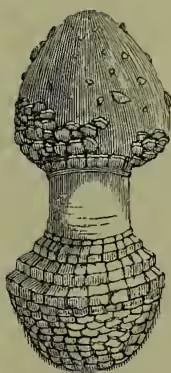
young.
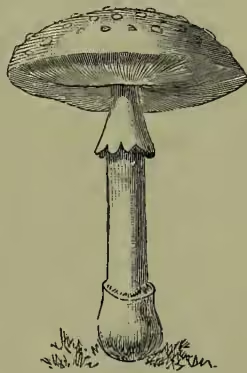
full-grown, more reduced.
purpose it is steeped in milk. The pileus or cap is of an orange-red colour, with white warts, the gills white, and the stem bulbous. It grows to a considerable size. It contains a bitter and narcotic principle, resembling in its physiological action that of Indian hemp (hashish), and is used by the Kamchadales to produce intoxication. The intoxicating principle passes off in the urine of those who swallow it, a circumstance of which they or others often avail themselves, when abundance of the fungus is not at hand.