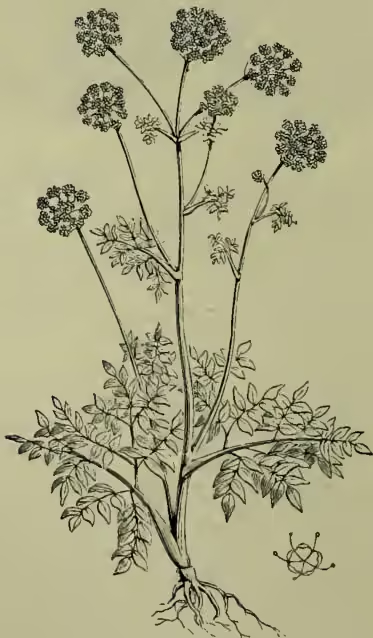
Angelica, a genus of plants of the natural order Umbelliferae (q.v.), by some botanists divided into two, Angelica and Archangelica. The species are mostly herbaceous and perennial, natives of the temperate and colder regions of the northern hemisphere. Wild Angelica (A. sylvestris) is a common plant in moist meadows, by the sides of brooks, and in woods in Britain and throughout many parts of Europe and Asia. The Garden Angelica (A. archangelica or Archangelica officinalis) is a biennial plant, becoming perennial when not allowed to ripen its seeds. The whole plant, and especially the root, is aromatic and bitter, with a pleasant, somewhat musky odour, and contains much resin and essential oil. The root was greatly valued in the middle ages as a specific against poisons, pestilential diseases, witchcraft, and enchantments, and was long employed as an aromatic stimulant and tonic, and in nervous and digestive ailments, but is now very little used in Britain. The root of A. sylvestris, sometimes substituted for it, is much weaker. The Garden Angelica was at one time also much cultivated for the blanched stalks, which were used as celery now is. The tender stalks and midribs of the leaves, candied, are still, however, a well-known article of confectionary, and an agreeable stomachic; the roots and seeds are employed in the preparation of gin and of 'bitters.' The plant is a very doubtful native of Britain, but is common in many parts of Europe, and even in Lapland and Iceland. Linnaeus describes the use of the dried root in Lapland as tobacco, and of the stem as a vegetable. The roots are occasionally ground and made into bread in Norway, and the Icelanders eat the stem and roots raw with butter. A. sylvestris has been used in tanning, and also as a yellow dye. Several species of angelica are natives of North America. The plant was called 'Angelic Herb' because of its repute as a defence against poison and pestilence.