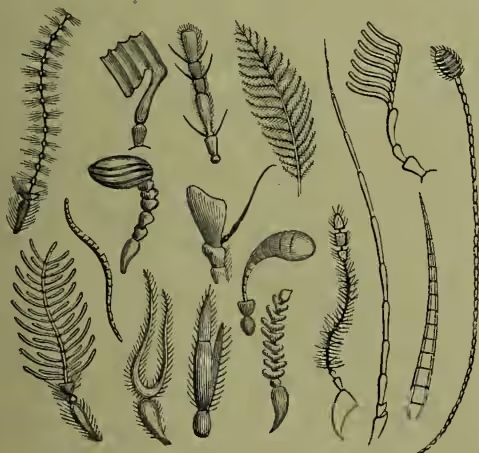
Antennæ, or feelers, the anterior appendages on the head of crustaceans, insects, and myriapods. The typical crustacean, such as a lobster, has two pairs of feelers, while insects and myriapods have only one pair. The name may also be applied to sensory processes on the head of some marine worms. They are really 'head-legs' modified for sensory purposes, and consist of a long series of joints, sometimes over 100 in number. They are supplied with nerve branches, and are used by the animals for feeling their way, for testing surrounding objects, and apparently for communicating with one another. Professor Graber has demonstrated the olfactory function of the antennæ of the cockroach, but some insects can smell their food even when robbed of their feelers. The smelling bristles of insects have been carefully studied by Braxton Hicks and Lowe in the case of the blowfly, where they occur very abundantly on the third joint of the antennæ. Peculiar sensory cones and knobs occur on the antennæ of some myriapods. The small antennæ of the lobster bear olfactory bristles, and have an ear lodged at the base. And in short there are numerous observations to justify the general statement that in many cases the antennæ are sensitive to smell, sound, and probably taste. Deprived of its antennæ, an ant, for instance, is peculiarly helpless.