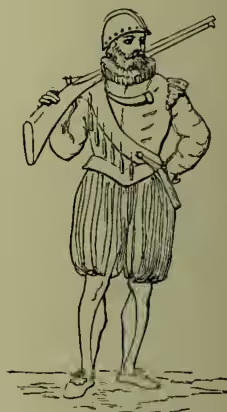
Arquebus, or HARQUEBUS (from Dutch haakbus, lit. 'a gun with a hook'), was the first form of hand-gun which could fairly be compared with the modern musket. Those of earlier date were fired by applying a match by hand to the touch-hole; but about the time of the battle of Morat, in 1476, guns were used having a contrivance suggested by the trigger of the arbalest or crossbow, by which the burning match could be applied with more quickness and certainty. Such a gun was the arquebus. The arquebus being fired from the chest, with the butt in a right line with the barrel, it was difficult to bring the eye down low enough to take good aim; but the Germans soon introduced an improvement by giving a hooked form to the butt, which elevated the barrel; and the arquebus then obtained the name of the haquebut. Soldiers armed with these two kinds of weapon were designated arquebusiers and haquebutters—the former were common in the English army in the time of Richard III., the latter in that of Henry VIII.