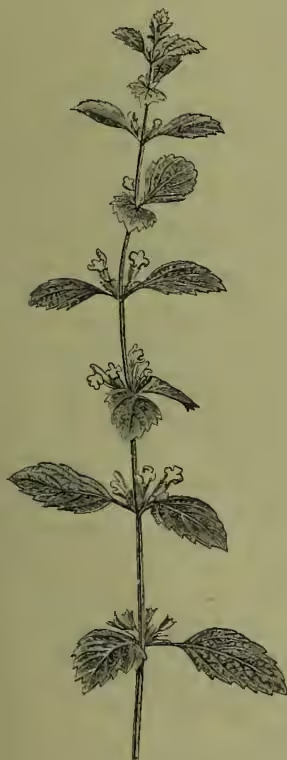
(Melissa officinalis).
Balm (Melissa officinalis), a fragrant perennial herb belonging to the order Labiate, a native of the south of Europe and Western Asia, and naturalised in a few places in England, has long been cultivated in gardens. The stems and leaves are still occasionally used in medicine as a gentle stimulant and tonic, and were formerly in high repute. The taste is somewhat austere, and slightly aromatic. The quantity of essential oil, on which its whole qualities depend, is not more than sufficient to communicate a pleasant flavour to the infusion. — A variety of the common Cat-mint (Nepeta cataria), with a smell like that of balm, is often mistaken for it. — Moldavian Balm (Dracocephalum moldavicum) is a native of Eastern Europe, Siberia, &c. — Bastard Balm (Melittis melissophyllum), a native of the south of England and of many parts of Europe, is a very beautiful plant, which when dried has a delightful fragrance, and retains it long. Calamintha nepeta is sometimes called Field-balm, while Collinsonia is termed Horse-balm in America. Balm-like properties are extremely common among the Labiatæ (q.v.). The name is from the late Latin balsamum.