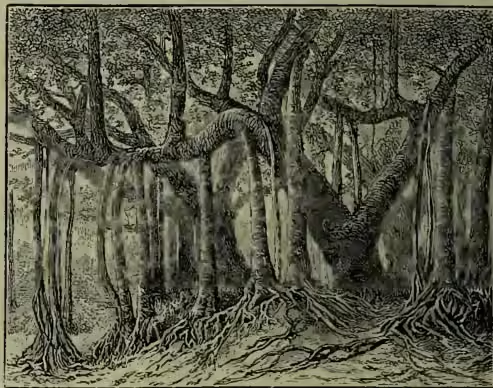
Banyan, or BANIAN (Ficus indica), an Indian tree, remarkable for its vast rooting branches. It is a species of Fig (q.v.); has ovate, heart-shaped entire leaves, about 5 or 6 inches long; and produces a fig of a rich scarlet colour, not larger than a cherry, growing in pairs from the axils of the leaves. The branches develop pendulous adventitious roots, which soon become new stems, the tree in this manner spreading over a great surface, in fact almost developing into a wood, and enduring for many ages, although the original central trunk decays. One has been described as having no fewer than 350 stems equal to large oaks, and more than 3000 smaller ones, covering a space sufficient to contain 7000 persons. The tree is inhabited by great numbers of birds, fruit-bats, and monkeys, which latter consume the leaves as well as the fruit. The seeds are often deposited by birds in the crowns of palms, and send down roots which become stems and eventually replace the palm altogether. The wood of the banyan is light, porous, and of no value; but the tree furnishes lac and caoutchouc, and the bark and milky juice are sometimes employed in Hindu native medicine. By the Brahmins the banyan is held in special reverence, as is its congener the Sacred Fig, also called Pcepul and Bo-tree (F. religiosa) by the Buddhists, so that it is said that the sites of temples can be readily distinguished as Brahmin or Buddhist by the presence of one or other tree.